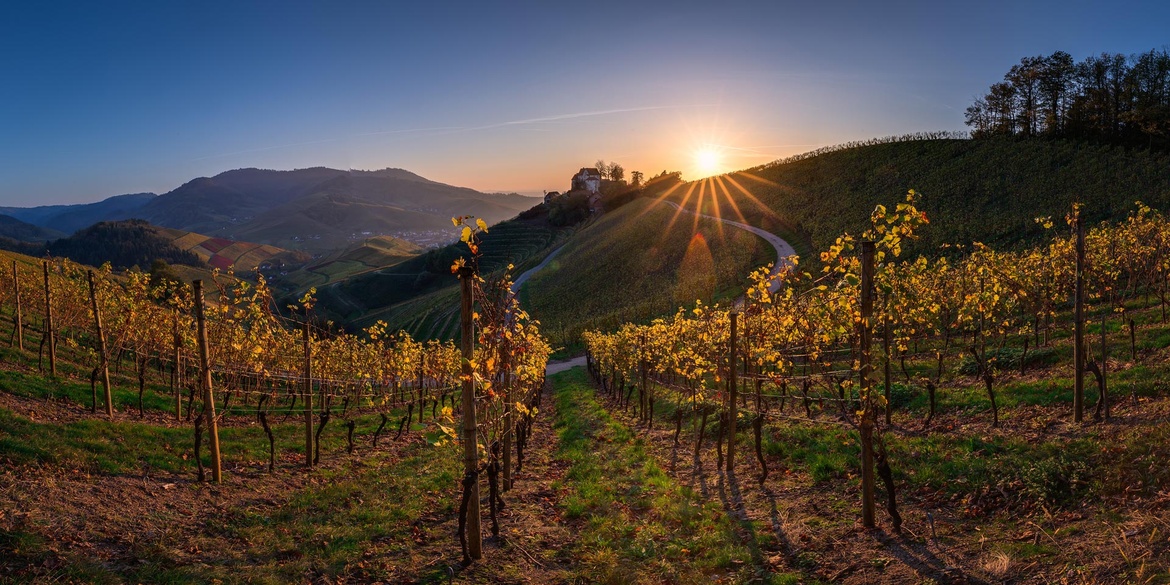
The Hotel-Restaurant Rebstock lies on the far side of Durbach, and it feels like a different world. The long-established inn is set in extensive parkland amid 460 hectares of vineyards. Trees, flowers and shrubs surround the property, and the grounds feature plenty of secluded spots, some offering coffee or ice cream.
None of this is down to chance. Volker Baumann, a fifth-generation innkeeper, has a very clear idea of what hospitality means to him.
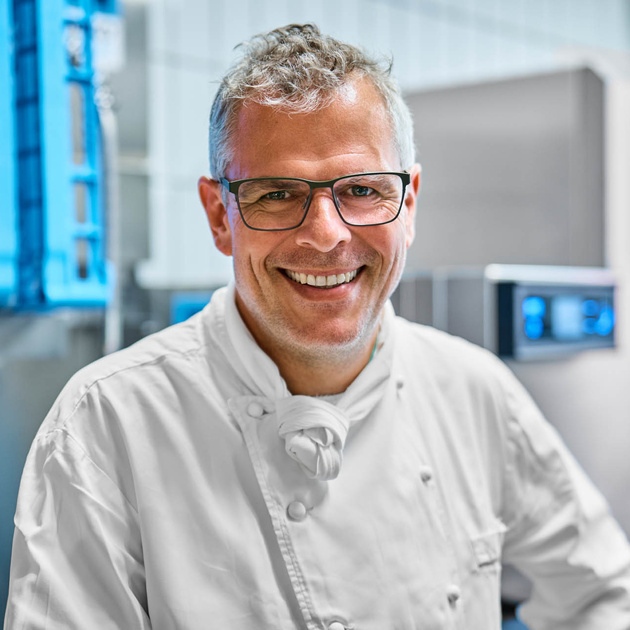
I want to create a perfect environment for my guests where they can feel happy and relaxed. If they spend three hours with us and come away feeling they’ve had a whole day’s holiday, then I’ve done everything right.
Volker Baumann
Owner of the Hotel-Restaurant Rebstock
Baumann’s solution involves a combination of tradition and constant evolution. He admits this can seem like something of a contradiction: "As a restaurateur and hotelier, you need to reinvent yourself every single day, but of course, regular guests don’t want anything to change!"
HOLDING ON TO WHAT PEOPLE VALUE
At the Rebstock, then, change basically means keeping what works while carefully moving things forwards. It’s a principle that has shaped the place for generations, and it goes all the way back to 1872, when an ancestor, Andreas Baumann, was granted a licence to serve drinks and turned what was then a farm estate into an inn.
Today, the Rebstock has 50 rooms and a restaurant that brings a fresh twist to classic flavours. Saddle of venison, braised veal in cream sauce, snail soup and pike dumplings sit happily alongside more contemporary dishes such as porcini ravioli au gratin. Old favourites stay on the menu, periodically joined by new creations.
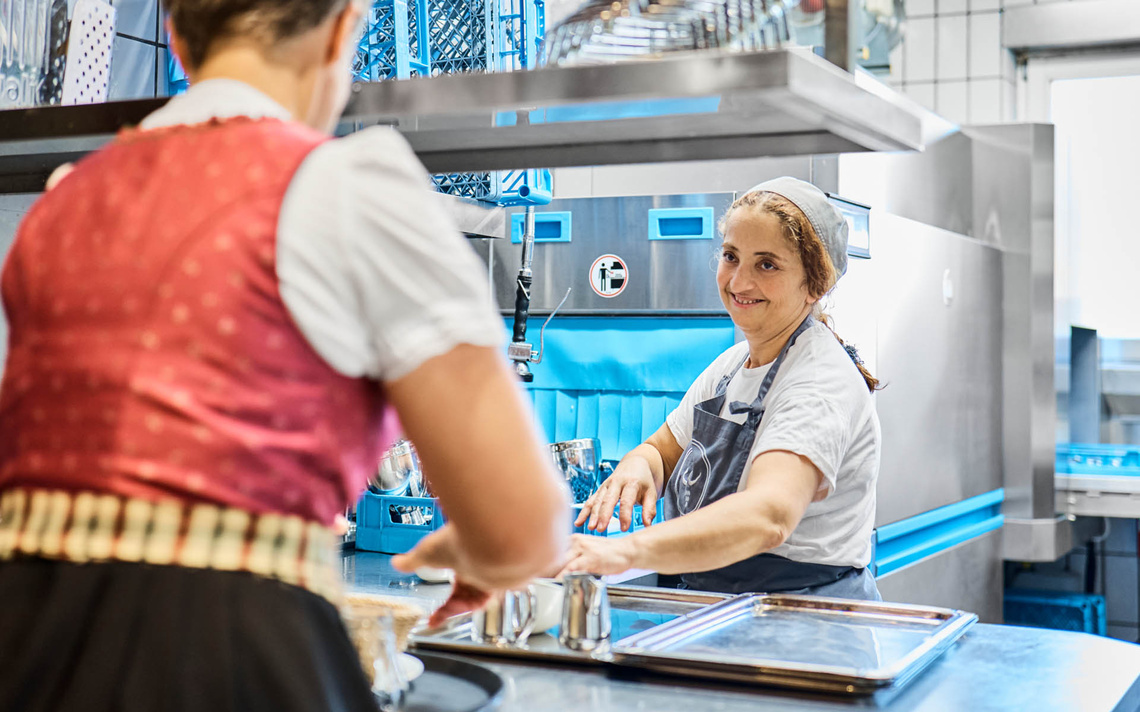
And the principle doesn't stop at the kitchen door. Guests mostly see the end result, but the quality of any restaurant is also decided in the behind-the-scenes places where few of them ever look.
THE PEOPLE BEHIND THE REBSTOCK
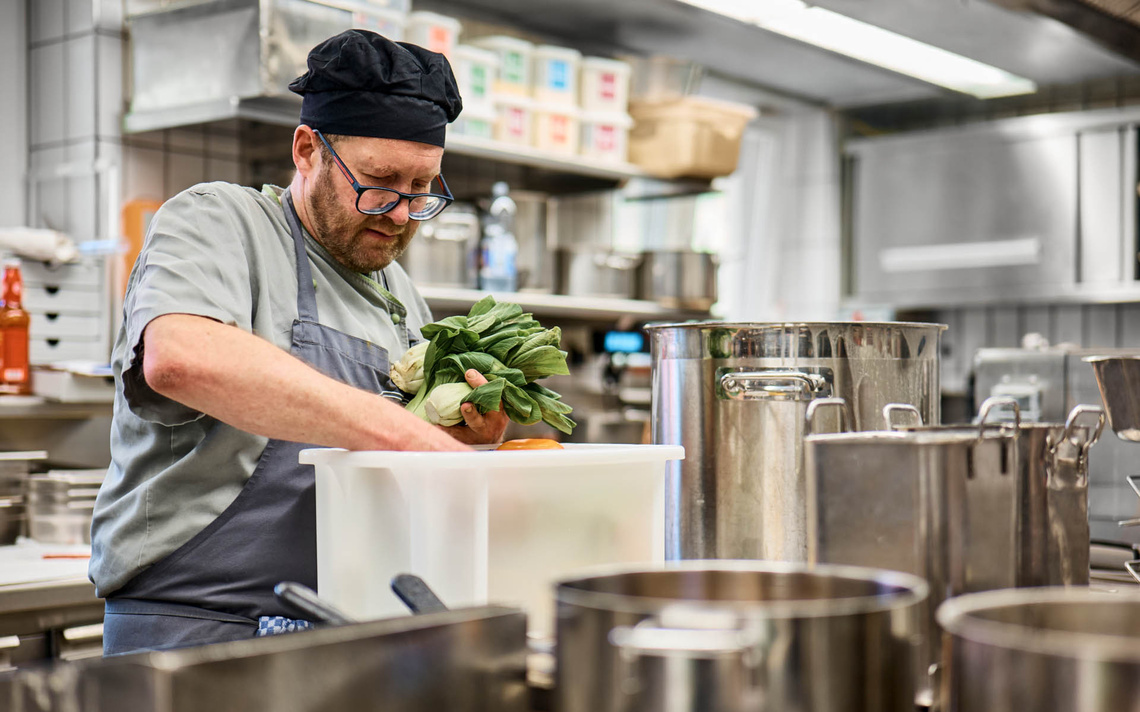
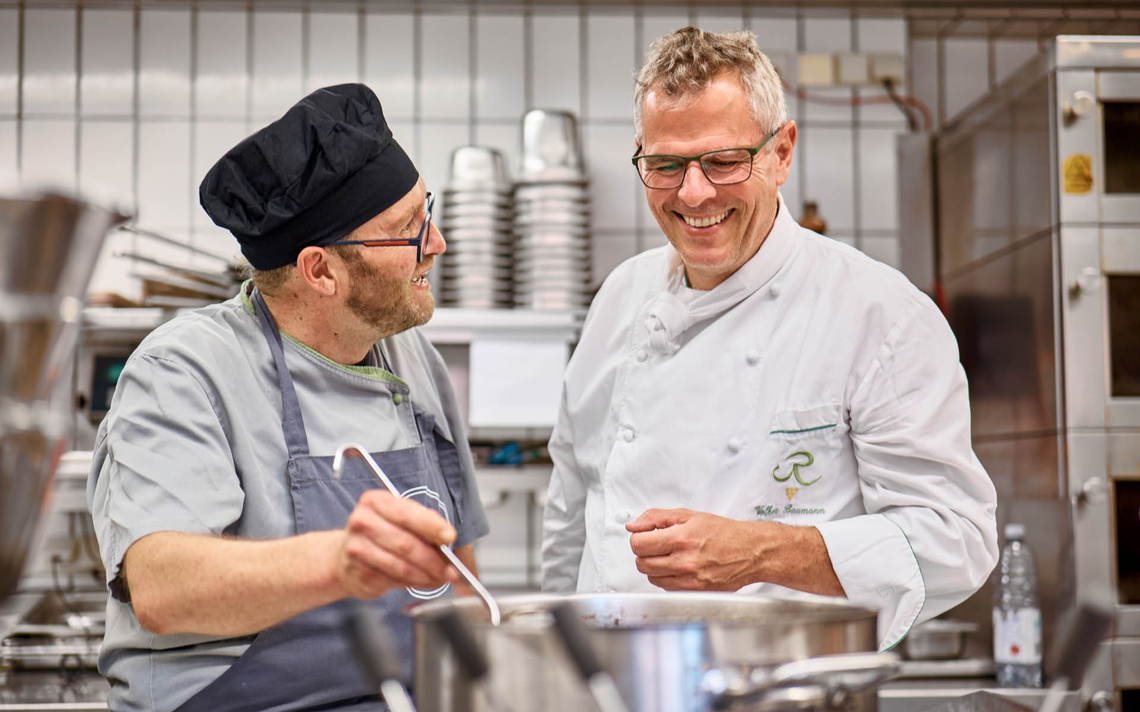
Baumann employs 58 people to help him turn his high standards into reality day after day. Many of them have been working here for years. "People come to work here and end up staying for good," Baumann says with a smile.
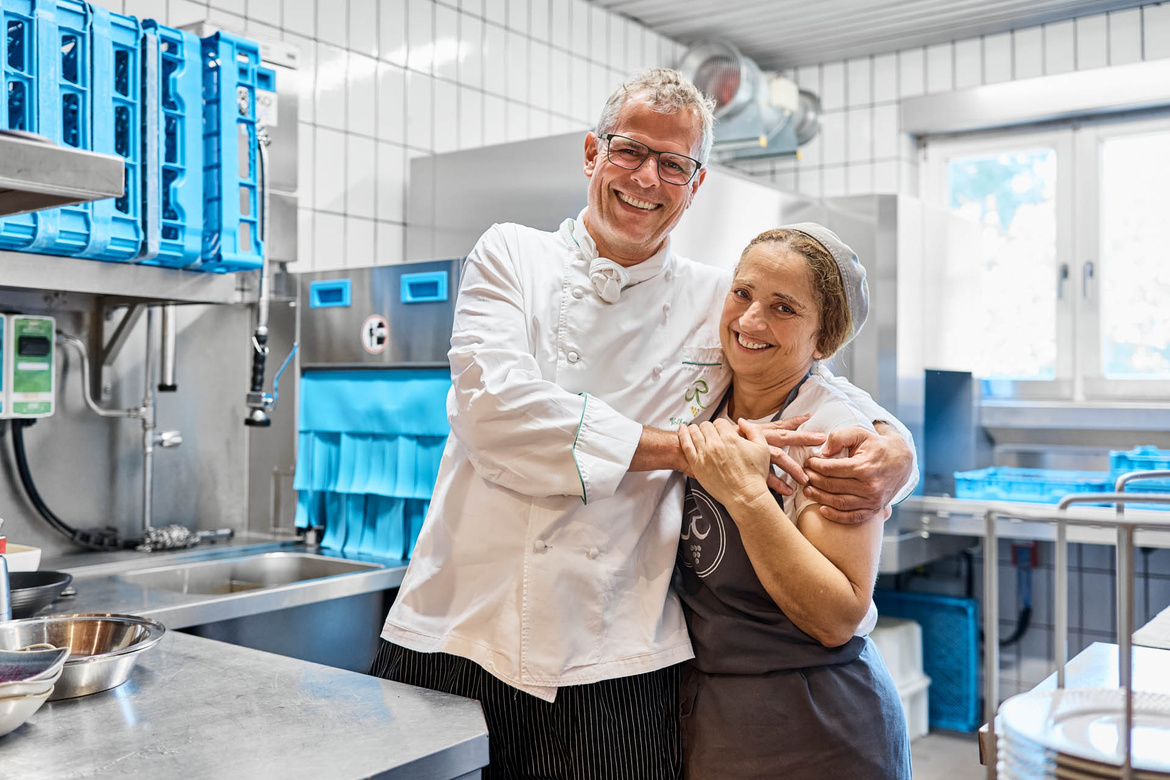
Hanim Göksu is one of them. She has worked in the kitchen’s wash-up area for 25 years, and also helps the chefs prepare the vegetables.
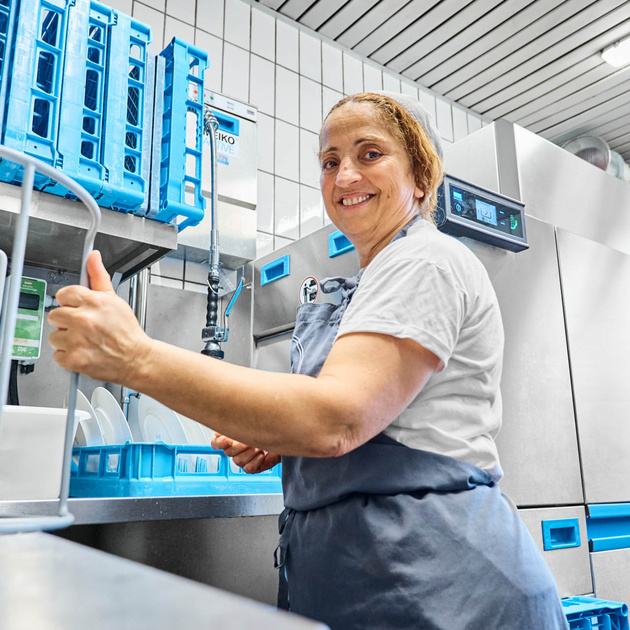
The team is great, my pay is good and our boss does everything he can to make sure we have the best possible working conditions.
Hanim Göksu
Staff member at the Hotel-Restaurant Rebstock
Baumann sees this as an essential part of running a successful business: if you expect quality from your staff, day in, day out, you need to put the right conditions in place. And the wash-up area shows particularly clearly how working conditions are closely tied to technology and process quality.
GET THE WAREWASHING PROCESS RIGHT, AND EVERYTHING ELSE FALLS INTO PLACE
Like many professional kitchens, the Rebstock keeps the space behind the scenes to the bare minimum. Yet the amount of washware it handles is considerable, with each guest leaving behind some 30 items to be washed.
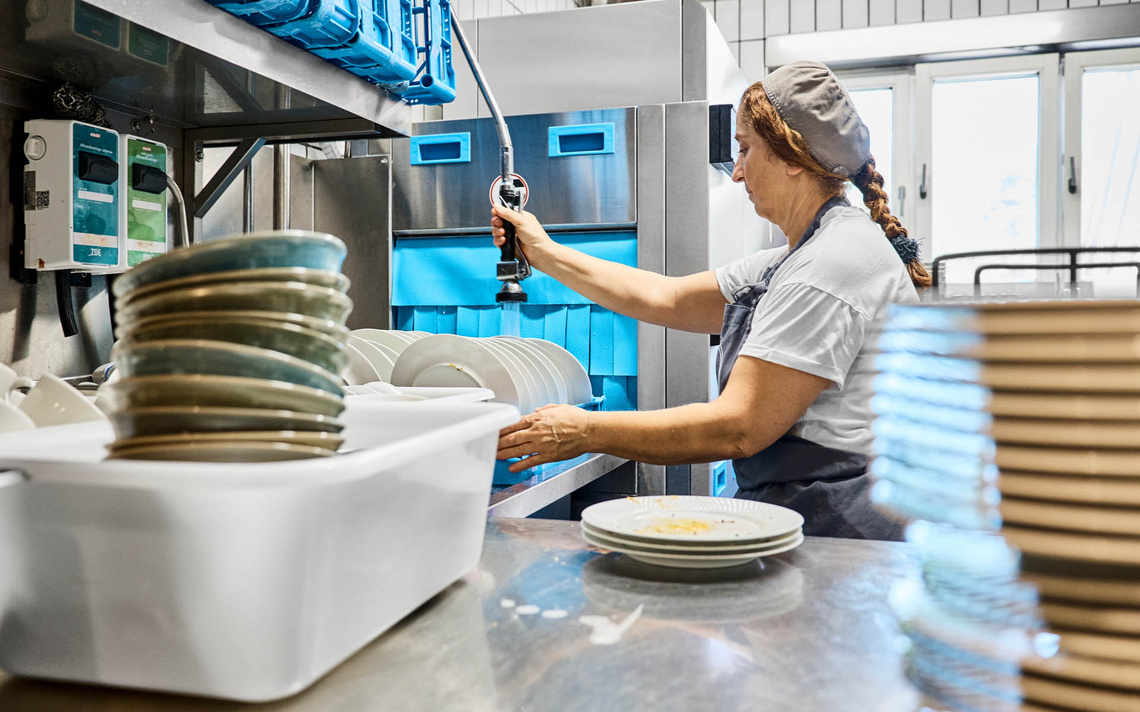
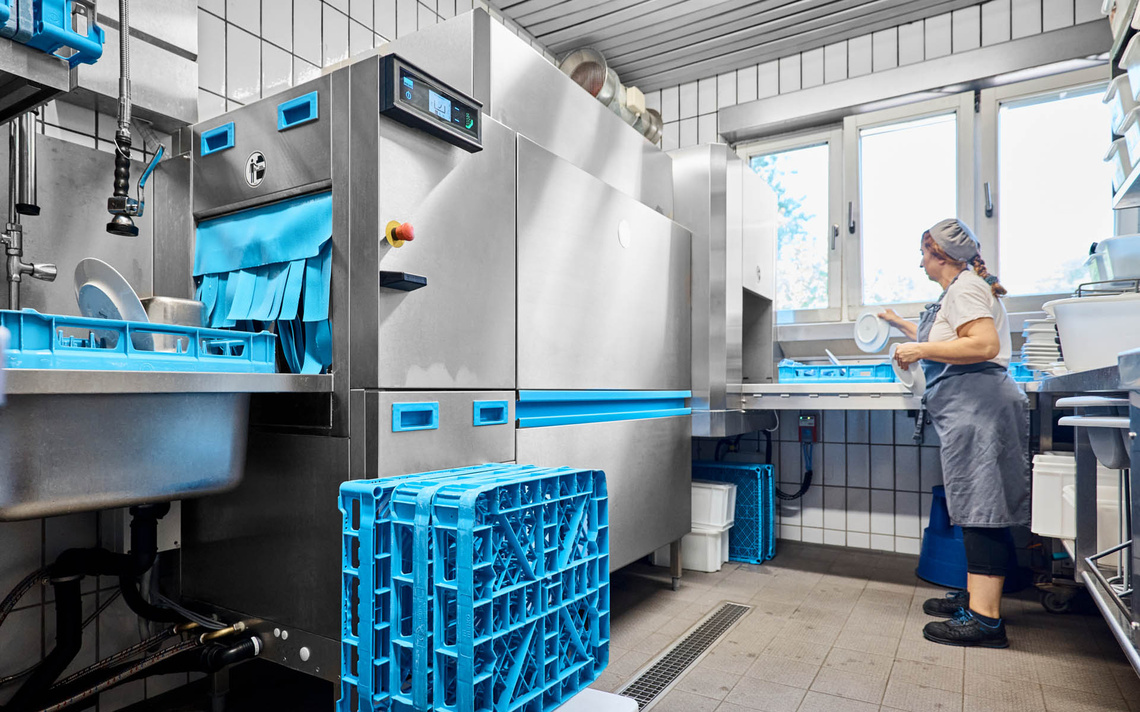
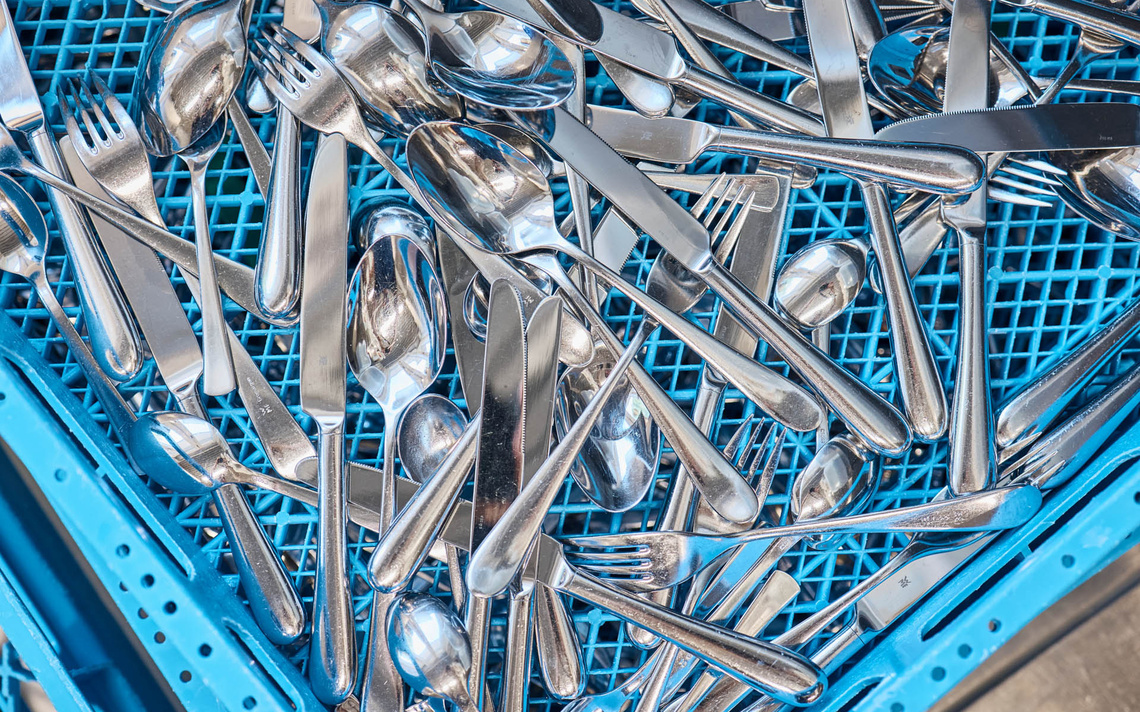
Hence Baumann’s decision, after some 20 years, to replace his trusty MEIKO UPster with a new MEIKO COMFORT R. The modular rack type dishwashing machine slots neatly into the available space, and the whole warewashing process runs even more smoothly and calmly than before, while using less energy and fewer resources.
The MEIKO COMFORT R has taken things to the next level – for our staff and our guests. Because if the warewashing process doesn't run smoothly, then nothing else will either.
Baumann’s own COMFORT R actually comes with something of a backstory. In the final stages of developing this new machine, the MEIKO team drew on his experience as a partner from the field. His feedback on day-to-day kitchen realities gave them valuable input for shaping the machine around what users really need.
MAKING A DIFFERENCE BEHIND THE SCENES
Everything that went into the machine’s development back then is now paying off in Baumann’s own wash-up area: smaller water tanks, lower energy and resource consumption, reliable drying and high standards of hygiene. The COMFORT R also gives him a clearer picture of how things stand. With MEIKO Assist Pro, he can keep an eye on the machine’s operating status, hygiene data, warewashing statistics, consumption figures and maintenance alerts in real time.
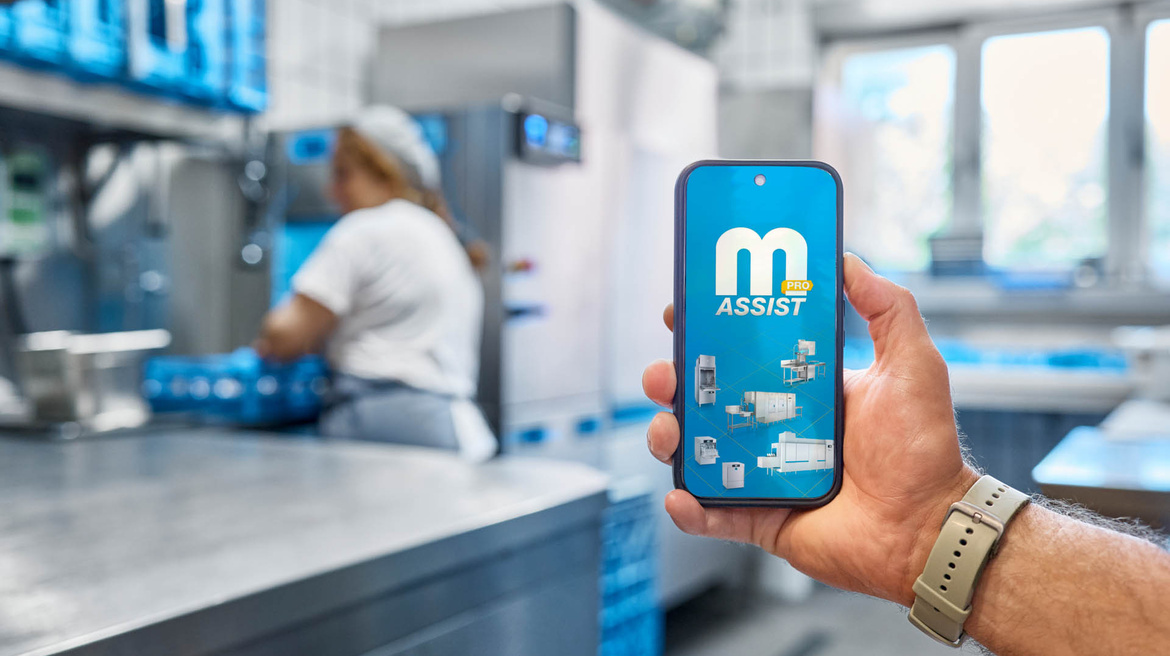
This data shows him at a glance how efficiently processes are running and where there might still be room for improvement in day-to-day operations.
For Baumann, that’s what really matters. Guests don’t necessarily have to see what’s changed, but they should be able to feel it. When the workflows are running smoothly, resources are being used efficiently, and the team has good working conditions, that leaves more scope for what has made the Rebstock so special for generations: making sure people have a memorable, enjoyable time.
And Göksu’s experience shows how this approach pays off for people behind the scenes, too. She’s been part of the team for 25 years and can easily see herself staying a good many more.